
 Upload Script
How McKee Approaches the Mushy Middle of a Screenplay
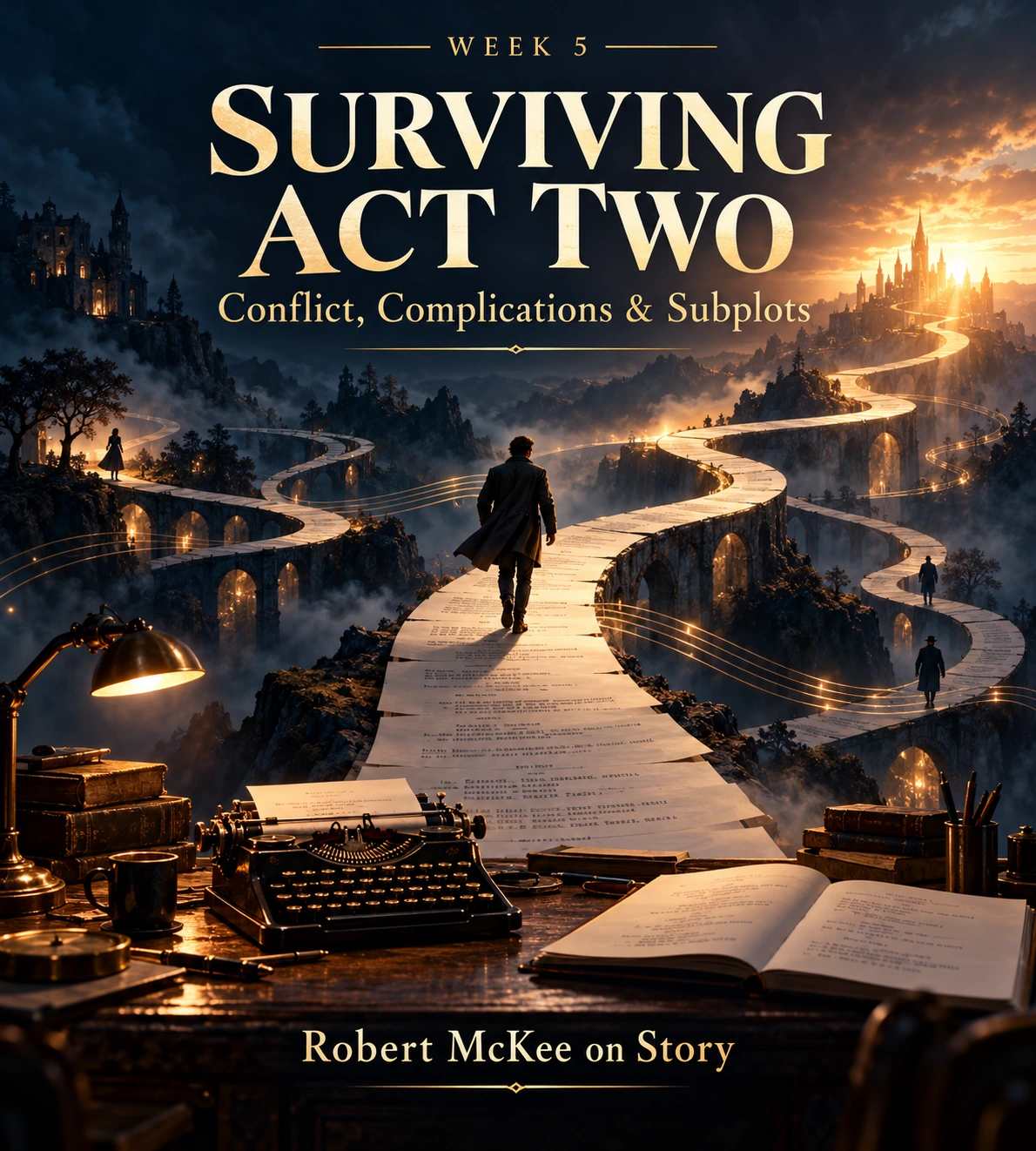
What McKee is really getting at this week is how to survive the dreaded mushy middle, that swampy stretch in the second act where so many scripts quietly lose their pulse and die. Instead of handing out a generic paint by numbers template, he looks at narrative design almost like a branch of physics. Most screenwriting guides are obsessed with telling you where your plot points should go, but McKee cares far more about why story energy moves in the first place, treating conflict like sound waves in music: the moment the friction stops, the narrative ceases to exist.
Progressive Complications and the Gap Between Expectation and Result
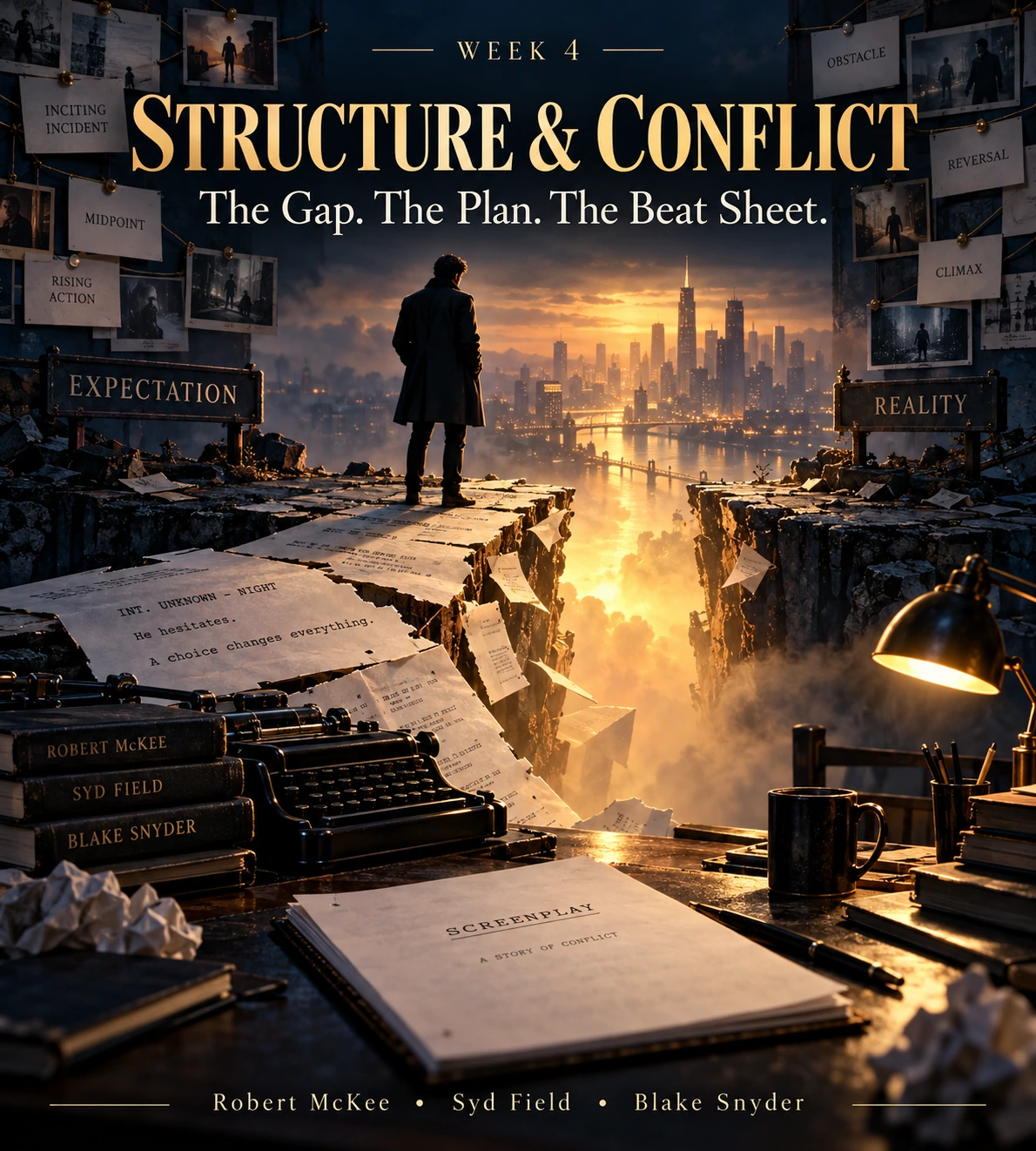
His core framework starts with progressive complications and the concept of the Gap. From the exact second an inciting incident shakes up the world, easy solutions are off the table. Naturally, a character's first instinct is to take the path of least resistance, doing the bare minimum while hoping for a quick win. But when the reality of the world pushes back hard, it rips open a gap between what they expected and what actually happens. McKee calls this crossing a Point of No Return. As a writer, you have to be completely ruthless here. Every time your characters try an easy fix, you have to slam the door behind them so they cannot go backward. They are forced to dig deeper, risk far more, and face pressure on all three levels at the same time: their internal demons, their personal relationships, and the broader external environment.
Act Climaxes and Subplots That Sustain Narrative Rhythm
He then explains that an entire script is arranged like movements in a symphony, with each act building toward a massive shift in life values. While managing this rhythm, he highlights two major traps writers constantly fall into. The first is the law of diminishing returns. If you try to make every single scene an earth shattering explosion, you just desensitize the audience, because stakes only carry weight if you leave breathing room for emotional texture. The second is the false climax trap, where a writer stacks too many artificial act breaks, which dilutes the punch of the true ending and leaves the story feeling exhausted and repetitive. Subplots play a crucial role in balancing this rhythm as well. McKee insists they are not just extra scenes meant to pad out your page count. A good subplot exists to do genuine heavy lifting, whether that means offering an ironic counter argument to your central theme, echoing the main dilemma through a secondary character, providing momentum when the main plot starts slowly, or slamming directly into the protagonist's path to create brand new obstacles.
Applying McKee’s Story Principles Without Becoming Overwhelmed
Grounding an entire plot in raw character psychology like this is genuinely brilliant, but McKee's purist philosophy can also be deeply intimidating. When you are told that every single act climax must permanently rearrange your hero's entire universe, and that every single subplot requires airtight thematic precision, it is incredibly easy to freeze up at the keyboard. McKee wants you to conduct a masterclass in psychological drama, which sounds gorgeous in theory, but when you are actually sitting down to write, sometimes you just want to drag your characters across the finish line of act two without feeling like you need a doctorate in human suffering to pull it off.