
 Upload Script
Reading six screenwriting bibles at the same time is less like studying craft and more like getting trapped in a small elevator with three radically different egos. It is pure cognitive whiplash. You are constantly bouncing between an arrogant, pipe-smoking art professor, a meticulous, monotone math teacher with a stopwatch, and a fast-talking corporate pitchman trying to close a deal before the elevator reaches the lobby. By the end of week one, the sheer volume of competing theories feels like an all-out turf war for your prefrontal cortex.
Robert McKee on Story Structure and Psychological Depth
Right off the bat, McKee emerges as the obvious favorite if you care about cinema as an actual art form. If you believe movies should explore the messy, complicated depths of human psychology, McKee is the only one in the room speaking your language. He treats structure not as a rigid cage, but as an organic, philosophical architecture built entirely out of conflict. By breaking a script down from the atomic beat into scenes, sequences, and full acts, he insists that every single unit must hinge on a life-altering value shift. In Story, he takes direct aim at modern Hollywood for relying on empty spectacle, CGI noise, and cheap narrative tricks instead of understanding basic human behavior.
Dialogue and Subtext as Character Action
Then, in Dialogue, he takes that philosophy even further by breaking speech into three distinct layers: the literal text on the surface, the tactical subtext brewing underneath, and the core psychological truth driving the whole confrontation. To McKee, dialogue is never casual chatter; it is verbal warfare where characters use language as an active weapon to get what they want. He treats the entire medium with genuine reverence, demanding that your script actually possess a soul.
Syd Field on Three Act Structure and Screenplay Troubleshooting
Then you turn the page to Syd Field, who approaches screenwriting like an architect armed with a calculator and a spreadsheet. Field is all about structure, clarity, and troubleshooting. In The Screenwriter's Workbook and The Screenwriter's Problem Solver, his entire mission is saving you from blank-page panic by forcing you to define your core focus and your protagonist's dramatic need before you type a single scene. He lays out his famous paradigm, shoving the narrative into three rigid boxes strictly determined by page count: the first thirty pages for setup, pages thirty through ninety for confrontation, and the final thirty for resolution.
A Critical Look at Field’s Teaching Style and Formatting Advice
But getting through his actual writing is an absolute endurance test. The opening chapters are buried under self-indulgent autobiographical rambling and bizarre repetitions that make you wonder if the publisher forgot to run an edit. When he finally gets around to craft advice, he dumps ultra-specific, antiquated formatting examples onto the page before you have even figured out what story you want to tell. Field gives you the necessary skeleton of a script, but he makes the learning process feel as dry as possible.
Blake Snyder on Loglines and Commercial Storytelling in Save the Cat
And finally, you run straight into Blake Snyder, who does not care about your artistic soul or your dramatic values. Snyder immediately grabs you by the collar and asks the blunt, cynical industry question: what is this movie, and can you sell it in a single sentence? In Save the Cat!, he bypasses high-minded theory and focuses entirely on the logline, demanding that a pitch hit four commercial criteria: an ironic hook, a clear mental picture that screams high-budget trailer, a defined target audience, and a punchy title that does the marketing for you.
The Tension Between Artistic Intent and Marketability
He is hyper-capitalistic, aggressively pragmatic, and completely obsessed with moving movie tickets. If you already resent the soul-crushing, assembly-line factory of modern studio blockbusters, reading Snyder feels like reading the diary of an unapologetic corporate sellout.
Final Comparison of Structure and Story Depth and Commercial Appeal
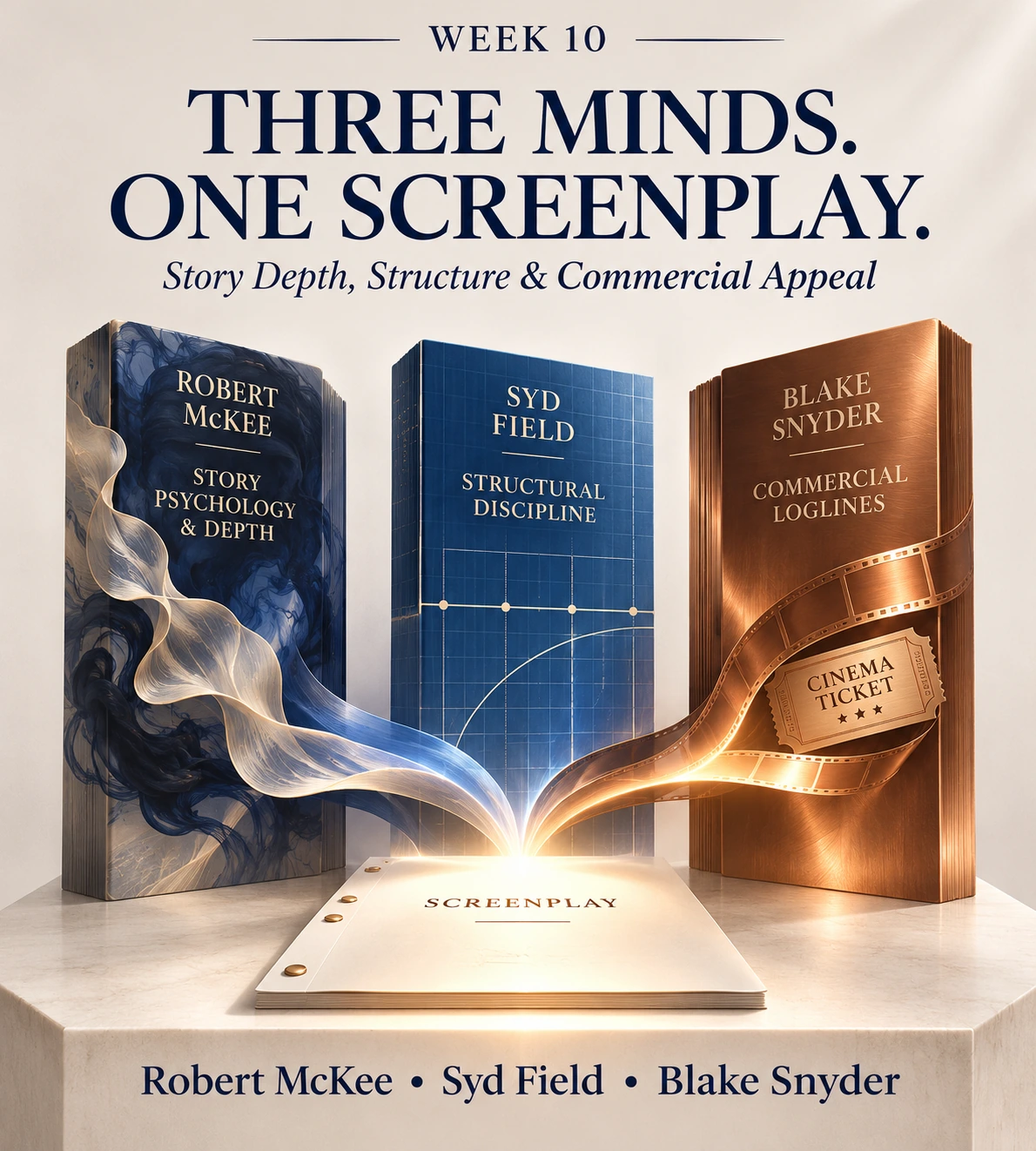
Yet despite the madness of processing all three simultaneously, the contrast is what makes the whole exercise work. They divide the craft into three distinct realities: Field gives you the structural discipline so you know how to think through the layout, McKee gives you the psychological depth so you know how to write something that matters, and Snyder shows up with a cold splash of reality to show you how the business actually sells it. Diving into McKee makes you want to write an intense, character-driven masterpiece; switching to Field bores you with technical blueprints; and cracking open Snyder turns into pure ragebait over art being reduced to a commercial formula. But when you stack them side by side, McKee wins the opening round without breaking a sweat. Blake, some of us are actually trying to make art.