
 Upload Script
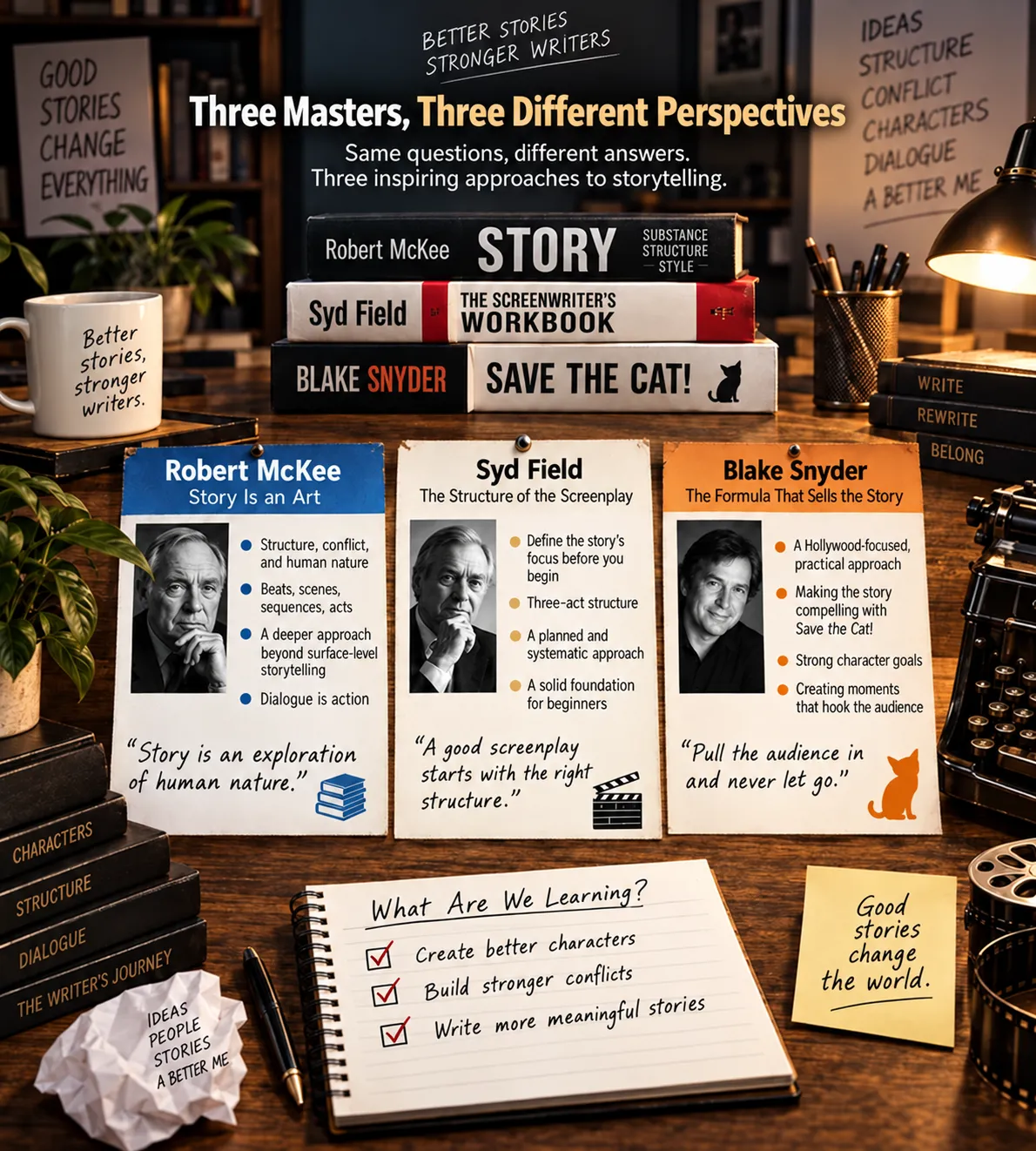
Robert McKee’s Story and Dialogue: Where Story Energy Comes From
I was already convinced that McKees books were meant to be read together but this week I feel as if I have proof that they were made to complete each other. They don’t just reference each other; they lock together like gears. Mckee spent chapters answering a question that the other books ive been reading ignored so far: where does the actual energy of a story come from?
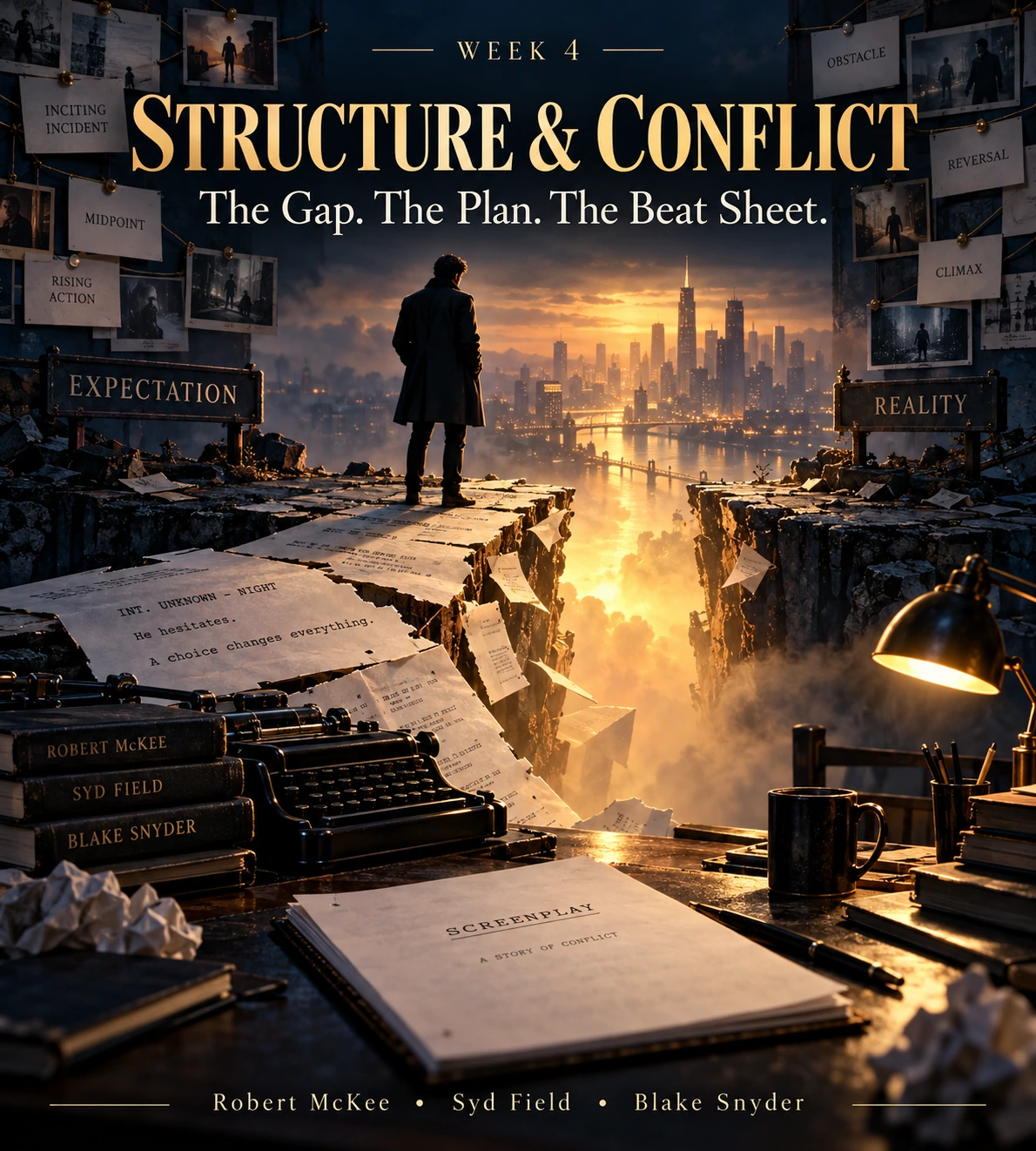
The Gap Between Expectation and Result: How Conflict Drives a Story
And his answer is beautiful. The Gap. This week, in story Mckee argues that the literal “substance” of a story isn’t the words on the page or the cool locations. It is the gap that opens up between Expectation and Result.
A character wants something, so they take a simple, low-risk action expecting the world to cooperate. But the world pushes back. A “gap” opens up between what they thought would happen and the harsh reality of what actually did.
To cross that gap, the character is forced to take a much bigger, riskier action; revealing who they actually are. If a character does something and the world reacts exactly how they expected, your story dies on the spot. Now this may seem familiar because McKee actually touched on this last week as well.
The Inciting Incident: Disrupting the Protagonist’s Life and Creating Desire
The inciting incident is the ultimate, massive Gap-generator. It is the evemt that radically upsets the balance of forces in the protagonists life. It pitches them into a chaos and instantly creates a conscious and/or unconscious object of desire; the thing they believe they need to restore the balance of their life.
Conscious and Unconscious Desire: How Subtext Shapes Dialogue
In dialogue McKee takes these macro structural concepts and translates them into the actual words your characters say. This is where he introduces Complications of Desire.
McKee points out that human beings are rarely simple. A character usually has a split desire: Conscious Desire; what they think they want in a scene (expressed in the literal spoken text). Unconscious Desire; their deep, hidden psychological need (which leaks out through the subtext).
Because of this internal friction, characters don’t talk to pass information; they use their words as tactical weapons to try and close The Gap. Their dialogue is the molecular reaction of their internal psychology colliding with the external structure of the plot.
Controlling Idea vs. Counter-Idea: Building Meaning Through Conflict
He also completely ruins the lazy writers dream of writing a basic “preachy” story. He explains that a screenplay is a dialectical debate.
You cant just have your controlling idea win every scene. You have to give the counter-idea equal, devastating power throughout the acts. It’s the ultimate reality check: meaning isn’t delivered via a megaphone; it is forged under pressure when your beliefs are tested to their absolute limits.
Syd Field on Screenplay Planning: Endings, Openings, and Setup
Why Field Recommends Knowing the Ending Before Writing the Beginning
This week in screenplay, field drops his most famous, anxiety- inducing rule: “if you don’t know your ending, you cannot write your beginning.”
He argues that a screenplay is a closed system. The ending and the beginning are magnetically linked. If you don’t know exactly where your characters are landing, your opening scenes will just wander around aimlessly.
The First Ten Pages: Establishing Character, Dramatic Premise, and Situation
Once you know the ending, you can design the setup. He argues that you have exactly ten pages to establish three things: “who is your main character? What is the dramatic premise? What is the situation?
The Four-Page Treatment: Mapping the Story Before Writing Scenes
Before you are allowed to write those ten pages, however, field makes you do the four pages treatment. This isn’t a rigid, page by page math formula. Its actually a four page narrative overview of your entire movie. He forces you to sit down and write your story in broad strokes from beginning to end. He is basically saying “don’t you dare start writing scenes until you can prove to me, in exactly four pages, that you actually know where this movie is going.”.
Once you have your four pages, he does a bit of Snyder-ness and he explains the reality of Hollywood: a reader or executive will decide whether they hate your script by page 10. If they aren’t hooked, they stop reading.
Beat Breakdown: Diagnosing Pacing Problems in the First Act
And finally, in the problem solver, field assumes your first ten pages are trash anyway, so he hands you the beat breakdown.
A beat is a specific unit of action or dialogue that moves the story forward. If the rhythm of your first act feels sluggish, he tells you to literally list every single beat of your first 30 pages on a chart. This is how you diagnose where the rhythm is broken and see if your dramatic premise is weak.
Syd field is basically a teacher who gives you homework to prepare for homework. Instead of writing a draft or anything, you have to write a four page summary, obsess over the first ten pages, and then map out every single neat on a chart just to make sure the rhythm is right.
However I believe that these exercises, while not for everyone, can be very beneficial for screenwriting. I do also think that these long and repetitive exercises can make you sick of your own story because you’ve spent too much time on these things.
Blake Snyder’s Save the Cat! Beat Sheet: Structure and Creative Constraints
Last week, I actually likes Blake Snyder. He felt like a cool guy writing helpful tips. But this week, Blake turned back into the total corporate control freak like I knew he was.
The 15-Beat Framework: From Opening Image to Final Image
According to Snyder’s formula, your entre 110 page movie must follow an exact mathematical schedule. It starts on page 1 with an opening image to show the hero’s flawed world, followed quickly on page 5 by a theme stated where a minor character casually explains the moral of the story. By page 10, your setup is complete, which means exactly on page 12, a catalyst must shatter the hero’s life. The herp then spends page 12 to 25 in a state of debate, hesitating until they finally break into two on page 25. Once in act two, the b story relationship kicks in on page 30, running alongside the fun and games (the cool, action-packed trailer scenes) until we hit a false victory or defeat at the midpoint on page 55. From there, the bad guys close in, piling on pressure until the absolute rock-bottom all is lost moment on page 75. After suffering through the dark night of the soul, the hero finally gets an epiphany on page 85 prompting a break into three. This leads to the action packed finale, wrapping up on page 110 with a final image that is the exact opposite of page one.
Does a Prescriptive Beat Sheet Limit Screenwriting Creativity?
So my opinions on his famous Beat Sheet; it does read like a lot of Hollywood movies I’ve seen. But those are the same cookie- cutter, assembly line movies that I hate. He claims every single movie in Hollywood history must hit exactly 15 specific beats on exact page numbers, no soul, no originality. He expects you to put the catalyst exactly on page 12, start the b story precisely on page 30, and hit all is lost right on page 75.
It seems almost like paint by numbers. If you follow Snyder’s advice, your script might be perfectly paced, but it’ll probably read like a cheap toy manufactured in a factory.
Week 4 Verdict: Comparing Story Conflict, Planning Exercises, and Beat Sheets
This was the best week for Mckee so far. As I probably said before he makes me actually do something, watch something artistic. A mediocre week for field, I don’t hate putting a lot of work into your story and really connecting with your own story. I hate repeat myself but he did say the same things in all tree books this week as well. And I was disappointed by Snyder because I was expecting a cool cinephile guy like last week but I got the same hyper capitalistic guy from the first week again.