
 Upload Script
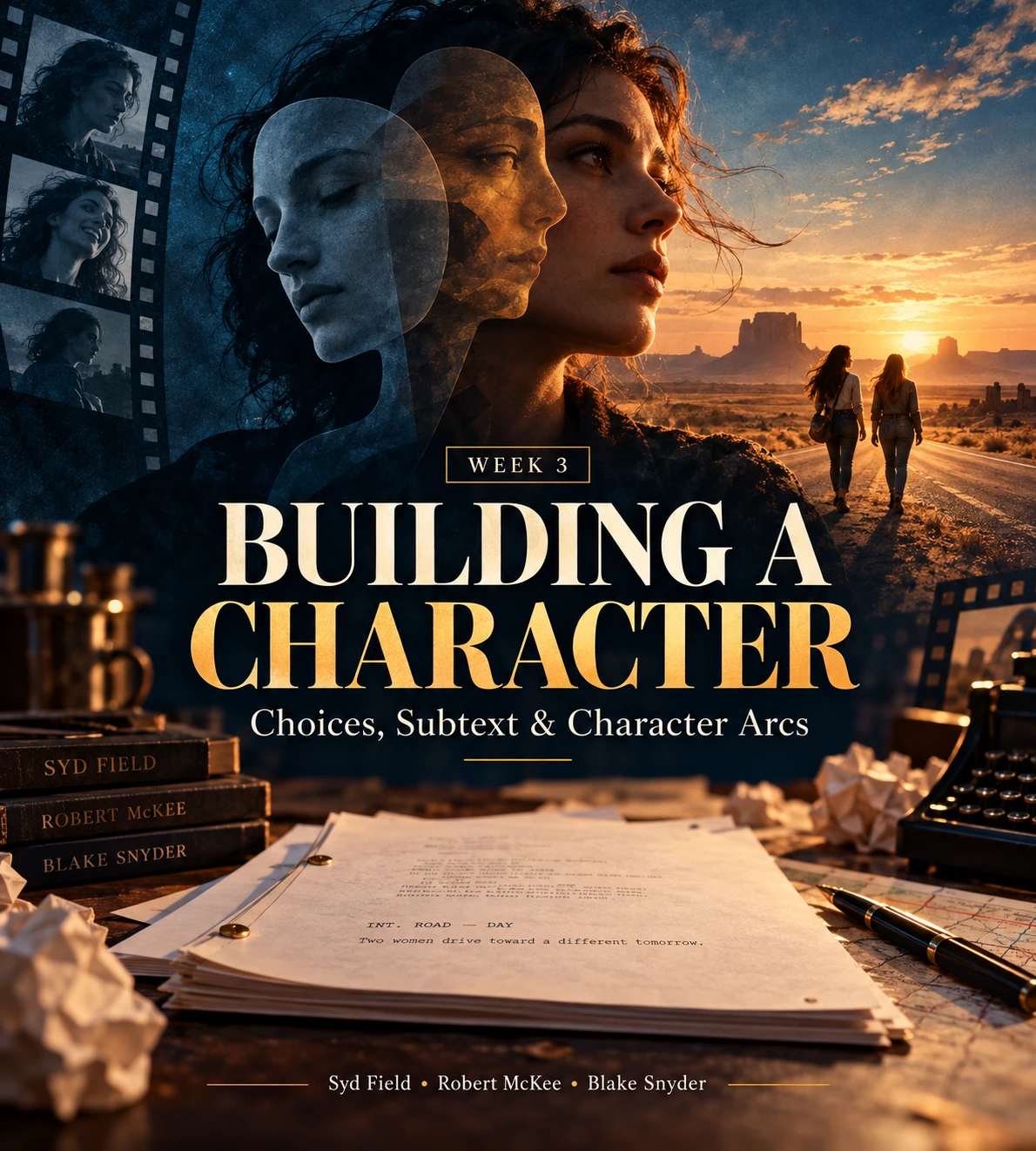
In week 3, all three of our beloved writes were talking about building a character, and I really enjoyed this week. The character aspect seems like a really fun and friendly way to start writing my story.
Robert McKee on Character: How Choices Under Pressure Reveal True Identity
This week, I started with Mckee, he says structure and character are the exact same thing, because a plot is just a stress-test designed to strip away a character’s mask. That may be a very impressive and a bit confuing way to put it but it actually boils down to “you do not know your character when everything going great. You can only start knowing them when you ruin their life.” Which makes a lot of sense and i'm sure you can see that in every movie you’ve ever watched. He understands that you can write a 50-page biography about a character’s favorite childhood toy but if you don’t put them in a burning room and force them to make a life-or-death choice, you haven’t actually written a character at all.
Mckee showed me that character isn’t who a person is on a normal Tuesday, it’s what they do when their world is collapsing.
Dialogue as Verbal Action: What Characters Want from Each Other
In dialogue, McKee takes a massive swing at every writer who uses speech as a lazy data dump. He does kind of repeat himself but the guy has a motto what can you do? “Dialogue is a verbal action, characters only speak to attack, defend or manipulate.”
The Said, the Unsaid, and the Unconscious: Character Voice and Subtext
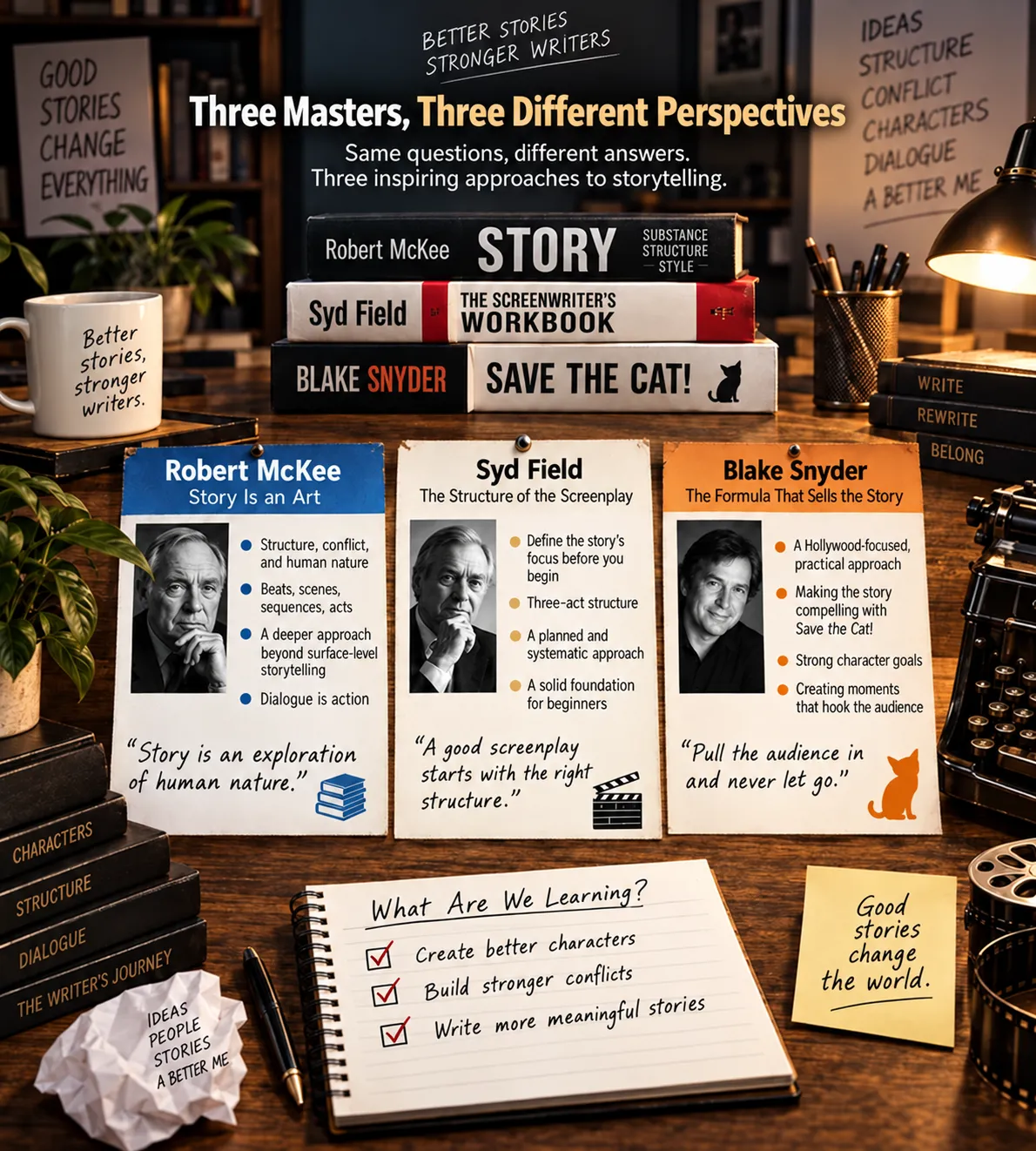
He breaks it down into three layers: the said, the unsaid, and the unconscious. This completely redefines what a unique voice means. Syd field thinks a unique voice means formatting the page correctly and giving a character a quirky catchphrase. Mckee shows us that true character specific dialogue is about subtext. It’s about the silent warfare happening between the lines.
Reading story and dialogue side by side this week felt amazing. Every page I was thinking to myself, “wow, this guy knows what he is talking about.”. These books fit together perfectly.
Syd Field’s Character Development Tools: Lessons from Thelma & Louise
I was fully prepared to be completely bored by Syd field this week because of his endless, shameless textual recycling. And to be fair the man is still doing it, he splits the same character definitions across three separate books. But he managed to save himself by doing something he failed to do with Shawshank last week: he actually analyzed the movie instead of recapping it. And he used one of my absolute favorite films (I might be biased) Thelma & Louise to do it.
Dramatic Need, Point of View, Attitude, and Change: Four Core Character Tools
Instead of just forcing me into a blank spreadsheet, field used the dynamic between Thelma and Louise to explain his four core character tools.
Dramatic need; at the start, their need is just a weekend getaway. But after the tragedy at the roadhouse, it instantly shifts to survival and escaping to Mexico.
Point of view; Louise is the pragmatic, cynical waitress who knows how dangerous the world is. Thelma is the naïve, sheltered housewife who thinks everything will be fine.
Attitude; field points out how their attitudes dictate their behavior. Louise is compulsively organized and cautious; Thelma is a bit chaotic and irresponsible.
Thelma & Louise’s Character Arcs: How Pressure Changes Their Roles
Change; this is where field actually won me over. He tracks the beautiful, tragic crossover arc of the movie. At he beginning, Louise is the leader and Thelma is the dead weight. But as the pressure dials up, they switch roles. Thelma wakes up, taps into her own power, robs a store, takes a cop hostage and becomes the fearless anchor of the duo while Louise becomes vulnerable.
Comparing Field’s Character Lessons Across Screenplay, The Workbook, and The Problem Solver
So, now that I have given credit where its due, he did it again. In the workbook he writes the exact same Thelma & Louise breakdown, but this time he tells you to turn it into a fill in the blanks kind of exercise.
In the problem solver is where it gets truly shameless. He takes the “circle of being” (his pie chart of professional, personal and private life) and applies it to… you guessed it, Thelma & Louise. Her spends pages dissecting Louise’s “professional life” as a coffee shop waitress and Thelma’s “private life” with her terrible husband, Darryl.
Syd field teaching method is essentially a corporate franchise. He found amazing script from 1991, cracked open its character mechanics and then stretched that single analysis across three different books.
In screenplay, he tells you what the character tools are using Thelma & Louise. In the workbook, he tells you how to practice those tools using Thelma & Louise. In the problem solver, he wraps Thelma& Louise in a circle of fix your broken script. It is the ultimate boilerplate loop. I love Thelma and Louise with all my heart but reading field analyze it three different times felt like being stuck in an infinite loop.
Blake Snyder on Protagonists: Building a Character Around the Logline
And finally, we have Blake Snyder, whose chapter title is the most beautiful, unpretentious thing I’ve read all month: “it’s about a guy who…”
While McKee is performing open heart surgery on human psyche and Syd field is stretching Thelma & Louise across three separate bank accounts, Blake Snyder walks into the room with a clipboard and tells you to start casting. I’m not going to lie; I loved him again this week. It completely drops the academic fluff and looks at character through pure, unfiltered narrative strategy.
Snyders entire philosophy this week boils down to one brutal truth; your protagonist is a slave to the logline. They don’t exist to answer the question “About whom?” and to find ways of strengthening the logline.
Primal Drives and Actor Archetypes: Snyder’s Practical Character Exercises
Instead of drawing a “circle of being” like field, Snyder forces you into some incredibly practical exercises:
Primal drives; he reminds you that audiences don’t connect with abstract intellectual dilemmas. Your hero must be driven by caveman stakes, basic, deep seated human survival instincts.
Casting out hero; he tells you to literally look at actor archetypes to find your characters baseline. He even breaks down special situations for when you’re trapped dealing with tricky ensembles or unlikeable biopics.
Week 3 Verdict: Three Approaches to Writing Screenplay Characters
So, this week’s verdict is, if you want to start learning screenwriting, these books are amazing sources and guides for doing so. Especially because these three men have such different views.